ANUNNAKIRISMO L’ESTETICA DEL MOVIMENTO
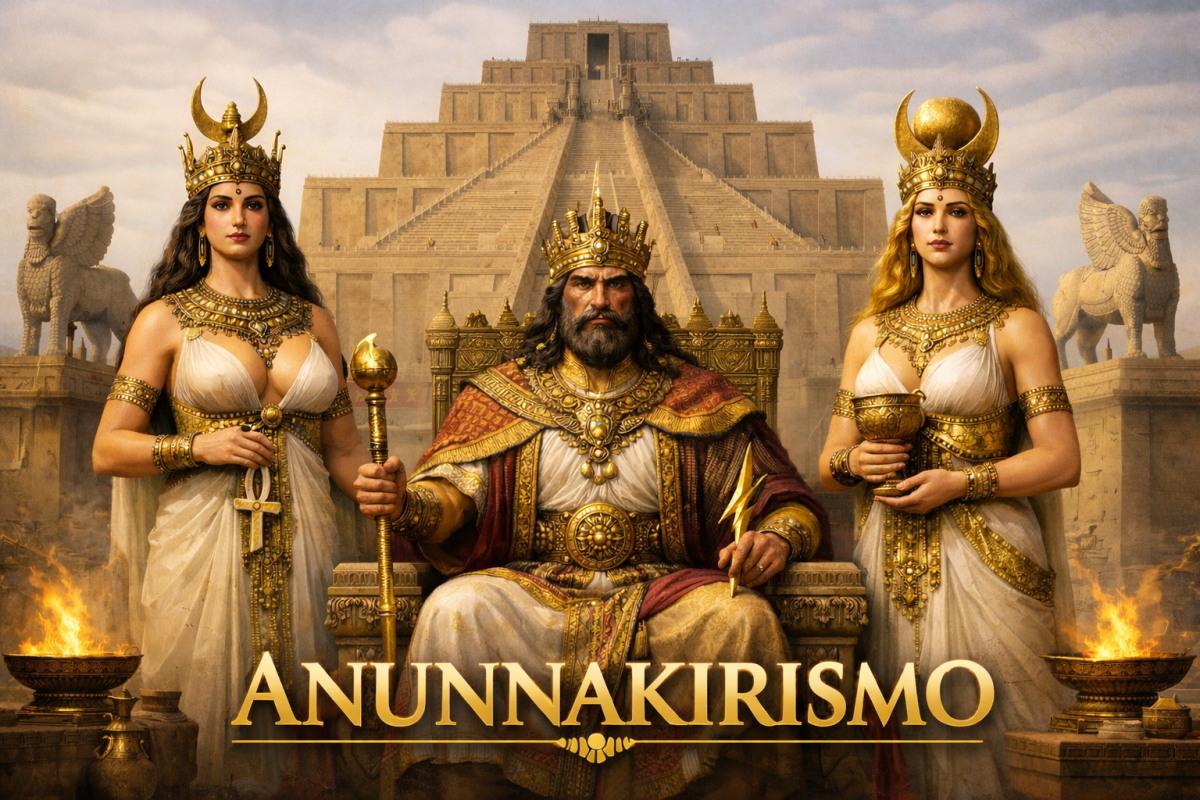
Nel panorama dell’arte contemporanea, attraversato da continue contaminazioni tra tecnologia, spiritualità e ricerca identitaria, emerge una corrente che si distingue per la sua tensione verso l’origine: l’Anunnakirismo. Più che un semplice movimento artistico, fondato dal Maestro Giuseppe Grieco in arte EditorDreams, esso si configura come una visione, un sistema simbolico e un linguaggio che tenta di riportare l’arte a una dimensione primordiale, dove segno e significato coincidono con una memoria ancestrale.
L’arte come codice generativo
Alla base dell’Anunnakirismo vi è l’idea che l’opera non rappresenti, ma generi. Non si tratta di raffigurare il visibile, bensì di evocare ciò che precede la forma: un codice invisibile che struttura la realtà. L’artista, in questa prospettiva, non è più un semplice autore, ma un intermediario tra frequenze, un traduttore di impulsi che sfuggono alla percezione ordinaria.
Il segno anunnakirico non è mai casuale. Ogni linea, ogni intersezione, ogni vibrazione cromatica si inserisce in un sistema coerente, che richiama simbolismi arcaici e al tempo stesso anticipa linguaggi futuri. È una scrittura che non si legge, ma si percepisce.
Origine e memoria archetipica
Il termine stesso richiama un immaginario antico, legato a civiltà primordiali e a narrazioni che intrecciano mito e coscienza. Tuttavia, l’Anunnakirismo non si limita a citare il passato: lo riattiva. L’opera diventa così un dispositivo di memoria, capace di risvegliare nell’osservatore una conoscenza latente. Questa dimensione archetipica si traduce in una ricerca formale che evita il superfluo. Le composizioni tendono all’essenzialità, ma non alla semplicità: ogni elemento è carico di una densità simbolica che invita a una fruizione lenta, quasi meditativa.
Frequenza, energia, trasformazione
Uno degli aspetti più distintivi del movimento è la centralità del “Concetto di Frequenza”. L’opera non è solo un oggetto visivo, ma un “Campo Energetico”. I colori, le forme e le strutture compositive sono pensati per generare una risonanza, una vibrazione che coinvolge lo spettatore a livello percettivo e, in alcuni casi, emotivo. In questo senso, l’Anunnakirismo si avvicina a una dimensione quasi terapeutica dell’arte, senza però perdere il suo rigore concettuale. La trasformazione non è imposta, ma suggerita: avviene nel momento in cui l’osservatore entra in relazione con il codice dell’opera.
Oltre la rappresentazione
Se gran parte dell’arte contemporanea si confronta con il reale, con il sociale o con il politico, l’Anunnakirismo sceglie una via diversa: quella dell’oltre. Non nega la realtà, ma la considera una superficie, un livello tra molti. L’opera diventa quindi una soglia, un passaggio verso dimensioni più profonde. Questa tensione si traduce in una poetica che rifiuta la narrazione lineare. Non ci sono storie da seguire, ma esperienze da attraversare. L’osservatore è chiamato a partecipare attivamente, a decifrare, a sentire.
Il ruolo dell’artista fondatore
In ogni movimento vi è una figura che ne incarna la visione originaria. Nell’Anunnakirismo, il fondatore assume il ruolo di custode del linguaggio, colui che ne definisce i principi e ne guida l’evoluzione. La sua ricerca non è solo artistica, ma anche filosofica: un’indagine continua sul rapporto tra forma, energia e coscienza. Attraverso le opere manifesto, il movimento costruisce una grammatica riconoscibile, destinata a evolversi ma sempre fedele alla sua radice: l’idea che l’arte possa essere un ponte tra il visibile e l’invisibile.
Conclusione
L’Anunnakirismo si inserisce nel dibattito contemporaneo come una proposta radicale e affascinante. In un’epoca dominata dalla velocità e dalla sovrapproduzione di immagini, esso invita a rallentare, a osservare, a entrare in contatto con una dimensione più profonda dell’esperienza estetica. Non rappresenta forme, ma origini. Non descrive il mondo, ma ne suggerisce il codice.
E forse, proprio in questa tensione verso l’invisibile, risiede la sua forza più autentica.
ANUNNAKIRISM THE AESTHETICS OF MOVEMENT
Within the contemporary art scene, characterised by constant cross-pollination between technology, spirituality and the search for identity, a movement is emerging that stands out for its focus on origins: Anunnakirism. More than a mere artistic movement, founded by Master Giuseppe Grieco, known by his artistic name EditorDreams, it takes the form of a vision, a symbolic system and a language that seeks to return art to a primordial dimension, where sign and meaning coincide with an ancestral memory.
Art as a generative code
At the heart of Anunnakirism lies the idea that the artwork does not represent, but generates. It is not a matter of depicting the visible, but of evoking what precedes form: an invisible code that structures reality. From this perspective, the artist is no longer a mere creator, but an intermediary between frequencies, a translator of impulses that elude ordinary perception.
The Anunnakiric sign is never random. Every line, every intersection, every chromatic vibration fits into a coherent system, which recalls archaic symbolism and at the same time anticipates future languages. It is a script that is not read, but perceived.
Origin and archetypal memory
The term itself evokes an ancient imagery, linked to primordial civilisations and narratives that intertwine myth and consciousness. However, Anunnakirism does not merely refer to the past: it reactivates it. The work thus becomes a device of memory, capable of awakening latent knowledge in the observer. This archetypal dimension translates into a formal exploration that eschews the superfluous. The compositions tend towards essentiality, but not simplicity: every element is imbued with a symbolic density that invites a slow, almost meditative engagement.
Frequency, energy, transformation
One of the movement’s most distinctive aspects is the centrality of the ‘Concept of Frequency’. The work is not merely a visual object, but an ‘Energy Field’. The colours, forms and compositional structures are designed to generate a resonance, a vibration that engages the viewer on a perceptual and, in some cases, emotional level. In this sense, Anunnakirism approaches an almost therapeutic dimension of art, without, however, losing its conceptual rigour. Transformation is not imposed, but suggested: it occurs the moment the observer enters into a relationship with the work’s code.
Beyond Representation
Whilst much of contemporary art engages with the real, the social or the political, Anunnakirism chooses a different path: that of the beyond. It does not deny reality, but regards it as a surface, one layer among many. The artwork thus becomes a threshold, a passage towards deeper dimensions. This tension translates into a poetics that rejects linear narrative. There are no stories to follow, but experiences to traverse. The observer is called upon to participate actively, to decipher, to feel.
The role of the founding artist
In every movement there is a figure who embodies its original vision. In Anunnakirism, the founder assumes the role of guardian of the language, the one who defines its principles and guides its evolution. His quest is not only artistic but also philosophical: a continuous exploration of the relationship between form, energy and consciousness. Through its manifesto works, the movement constructs a recognisable grammar, destined to evolve yet always faithful to its roots: the idea that art can be a bridge between the visible and the invisible.
Conclusion
Anunnakirism enters the contemporary debate as a radical and fascinating proposition. In an age dominated by speed and the overproduction of images, it invites us to slow down, to observe, and to connect with a deeper dimension of aesthetic experience. It does not represent forms, but origins. It does not describe the world, but suggests its code. And perhaps it is precisely in this striving towards the invisible that its most authentic strength lies.
Hai bisogno di informazioni?
Vuoi chiedere maggiori informazioni? Lasciami un messaggio, risponderò al più presto