ANUNNAKIRISMO L’ENIGMA DELLA MEMORIA
ANUNNAKIRISMO L’ENIGMA DELLA MEMORIA
Nel panorama sempre più ibrido dell’arte contemporanea, dove simbolismo, tecnologia e spiritualità si intrecciano, emerge una corrente visiva che sfugge alle categorie tradizionali: l’Anunnakirismo.
Fondata dal Maestro Giuseppe Grieco, in arte EditorDreams più che un’estetica, si configura come un linguaggio, una grammatica visiva che rielabora archetipi antichi attraverso una sensibilità
profondamente contemporanea.
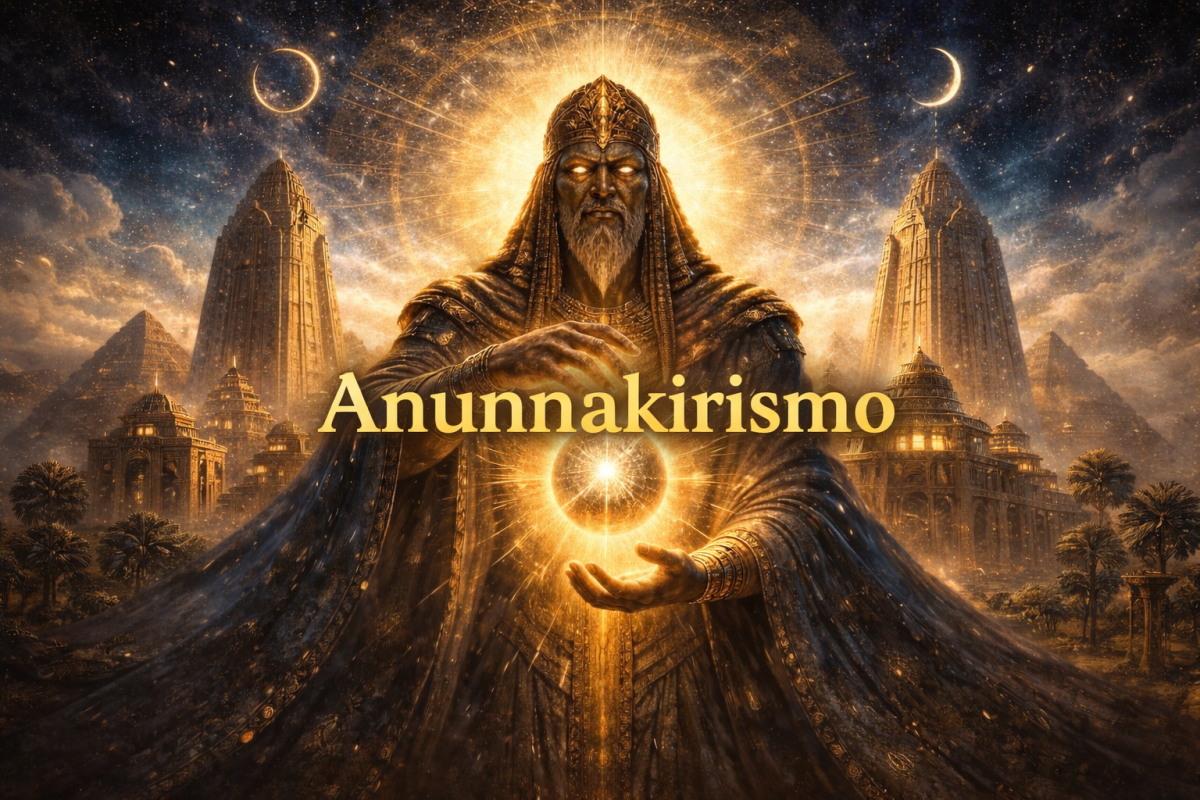
La superfice pittorica di questo Movimento si presenta come una costruzione iconica di forte impatto: una figura ieratica, sospesa tra divinità e archetipo, domina la composizione. Il corpo è avvolto in una tessitura luminosa che richiama tanto l’iconografia mesopotamica quanto certe declinazioni del sacro nella pittura rinascimentale, ma viene qui reinterpretata attraverso una lente digitale, quasi post umana.
Al centro della scena, una sfera radiante diventa fulcro semantico e visivo. Non è semplicemente un elemento compositivo, ma un dispositivo simbolico: un nucleo energetico che suggerisce un’idea di origine, di conoscenza concentrata, di potere generativo. La luce che emana non illumina lo spazio in modo naturale, ma lo trasfigura, rendendolo un campo di tensione tra materia e informazione.
Tra archeologia del mito e immaginario tecnologico questa opera, particolarmente rilevante nel contesto contemporaneo, esprime la sua capacità di operare su più livelli temporali. Da un lato, si radica in un immaginario arcaico, evocando le civiltà mesopotamiche e il mito degli Anunnaki; dall’altro, utilizza una resa dettagliata nella costruzione di ambienti immersivi.
Questa doppia appartenenza genera una frizione interessante: il passato non viene citato, ma ricodificato. L’artista non si limita dunque, come ci si aspetterebbe, a rappresentare un mito, ma lo trasforma in un sistema visivo attivo, capace di dialogare con le inquietudini del presente:
identità, origine, evoluzione.
La composizione si costituisce attraverso un perimetro pittorico di centralità e trascendenza metafisica, che esprime una nuova e coinvolgente iconografia del potere. La figura non è inserita nello spazio in maniera asettica ma lo organizza. Tutto converge verso il centro: lo sguardo, le architetture, le linee di forza luminose. Questa centralità richiama le icone religiose, ma ne sovverte il significato.
Non siamo di fronte a una divinità da venerare, bensì a una presenza che sembra attivare un processo di riconoscimento nello spettatore. L’opera di per sè non chiede devozione, ma partecipazione. In questo senso, l’Anunnakirismo si distacca dalle tradizionali rappresentazioni del sacro per proporre una “Memoria della Riattivazione”: ciò che viene mostrato non è altro che una potenzialità latente.
Elemento dominante è la luce, trattata non come effetto ma come sostanza. Essa struttura la scena, definisce i volumi, costruisce lo spazio simbolico come linguaggio visivo. La sfera centrale, in particolare, si impone come un vero e proprio codice silenzioso: una forma semplice che contiene un significato complesso. Potrebbe essere letta come energia, coscienza, tecnologia o memoria.
Questa ambiguità è precisamente ciò che rende l’opera aperta, contemporanea, non riducibile a un’unica interpretazione.
L’Anunnakirismo, in questa declinazione, si colloca in una zona liminale tra arte, filosofia e visione speculativa. Non è solo un’estetica, ma un tentativo di ridefinire il rapporto tra immagine e conoscenza. In un’epoca in cui le immagini sono ovunque e spesso prive di profondità, questa opera si distingue per la sua capacità di reintrodurre il mistero. Non offre risposte, ma apre uno spazio di interrogazione. Ed è forse proprio in questa tensione, tra visibile e invisibile, passato e futuro, umano e oltre l’umano che risiede la sua forza più autentica.
ANUNNAKIRISM THE THE ENIGMA OF MEMORY
In the increasingly hybrid landscape of contemporary art, where symbolism, technology, and spirituality intertwine, a visual movement is emerging that defies traditional categories: Anunnakirism. Founded by Master Giuseppe Grieco, known by his artistic name EditorDreams, it is more than an aesthetic; it takes the form of a language, a visual grammar that reworks ancient archetypes through a deeply contemporary sensibility.
The pictorial surface of this Movement presents itself as a striking iconic construction: a hieratic figure, suspended between divinity and archetype, dominates the composition. The body is enveloped in a luminous weave that evokes both Mesopotamian iconography and certain depictions of the sacred in Renaissance painting, yet is reinterpreted here through a digital, almost post-human lens.
At the center of the scene, a radiant sphere becomes the semantic and visual fulcrum. It is not merely a compositional element, but a symbolic device: an energetic nucleus suggesting an idea of origin, of concentrated knowledge, of generative power. The light it emanates does not illuminate the space naturally, but transfigures it, rendering it a field of tension between matter and information.
Straddling the archaeology of myth and technological imagery, this work particularly relevant in the contemporary context demonstrates its ability to operate across multiple temporal planes. On the one hand, it is rooted in an archaic imagery, evoking Mesopotamian civilizations and the myth of the Anunnaki; on the other, it employs detailed rendering in the construction of immersive environments.
This dual affiliation generates an interesting tension: the past is not merely referenced but recoded. The artist does not, therefore, limit himself as one might expect to representing a myth, but transforms it into an active visual system capable of engaging with the anxieties of the present:
identity, origin, evolution.
The composition is structured around a pictorial perimeter of centrality and metaphysical transcendence, expressing a new and compelling iconography of power. The figure is not inserted into the space in an aseptic manner but organizes it. Everything converges toward the center: the gaze, the architecture, the luminous lines of force. This centrality evokes religious icons, yet subverts their meaning.
We are not faced with a deity to be worshipped, but rather with a presence that seems to trigger a process of recognition in the viewer. The work itself does not demand devotion, but participation. In this sense, Anunnakirism breaks away from traditional representations of the sacred to propose an “Memory of Reactivation”: what is shown is nothing more than latent potential.
The dominant element is light, treated not as an effect but as a substance. It structures the scene, defines volumes, and constructs symbolic space as a visual language. The central sphere, in particular, stands out as a veritable silent code: a simple form containing a complex meaning. It could be read as energy, consciousness, technology, or memory. This ambiguity is precisely what makes the work open-ended, contemporary, and not reducible to a single interpretation.
Anunnakirism, in this iteration, occupies a liminal zone between art, philosophy, and speculative vision. It is not merely an aesthetic but an attempt to redefine the relationship between image and knowledge. In an age where images are everywhere and often devoid of depth, this work stands out for its ability to reintroduce mystery. It offers no answers, but opens up a space for questioning. And it is perhaps precisely in this tension between the visible and the invisible, the past and the future, the human and the beyond-human that its most authentic strength lies.
Hai bisogno di informazioni?
Vuoi chiedere maggiori informazioni? Lasciami un messaggio, risponderò al più presto