ANUNNAKIRISMO VERSAILLES IL SOLE
ANUNNAKIRISMO VERSAILLES IL SOLE
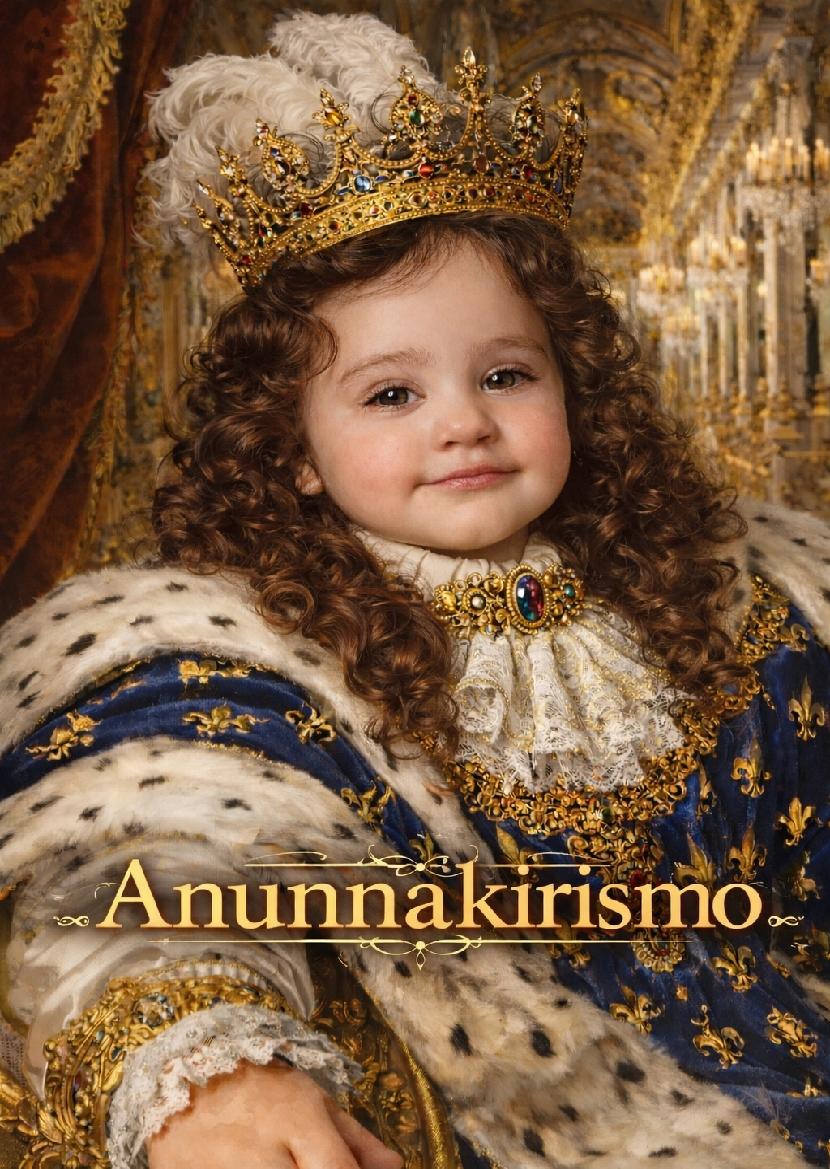
C’è qualcosa di profondamente evocativo in questa immagine: uno sguardo innocente, avvolto da un’estetica regale che richiama direttamente la magnificenza di Luigi XIV, il celebre Re Sole. Ma qui non siamo davanti a una semplice rievocazione storica. Siamo di fronte a una reinterpretazione simbolica, quasi poetica, del potere, della purezza e dell’identità. Ambientata in uno scenario che richiama la sontuosità della Reggia di Versailles, l’immagine fonde due dimensioni apparentemente opposte: l’infanzia e la regalità assoluta. Il risultato è sorprendente. In realtà la bambina ritratta, Martina Grieco figlia del Maestro Giuseppe Grieco EditorDreams, vestita con abiti barocchi ricchi di dettagli dorati, ermellino e simboli di potere, non appare come un immagine distante o autoritaria, ma serena, quasi consapevole di una grandezza che non è ancora stata definita.
Nel contesto contemporaneo, questa rappresentazione assume un significato ancora più profondo. La figura del “Re Sole” non è più soltanto simbolo di potere politico o dominio assoluto, ma diventa metafora di luce interiore, di autenticità e di potenziale umano. Lo sguardo della bambina non impone: accoglie. Non domina: osserva. Ed è proprio qui che avviene la trasformazione. L’autorità lascia spazio alla presenza, il controllo alla consapevolezza. L’uso di elementi barocchi, la corona elaborata, i tessuti preziosi, i dettagli dorati, crea un ponte diretto con il passato, ma l’interpretazione è decisamente attuale. Non si tratta di imitare la storia, ma di reinterpretarla attraverso un nuovo linguaggio visivo: Quello dell’Anunnakirismo. La ricchezza decorativa non è fine a sé stessa: diventa scenografia di un messaggio più ampio. La bellezza, qui, è strumento di narrazione. Ogni elemento contribuisce a costruire un’atmosfera che oscilla tra sogno e memoria collettiva.
In questa immagine, il concetto di potere viene completamente ridefinito. Non è più legato al controllo sugli altri, ma alla capacità di essere centrati, presenti, luminosi. Una sorta di “Sovranità Interiore” che appartiene a ciascun individuo sin dalla nascita. È un messaggio potente: ogni essere umano è, in potenza, un Re Sole. Non per dominare, ma per illuminare. Questa rappresentazione si inserisce perfettamente nel panorama artistico contemporaneo, dove la contaminazione tra epoche, simboli e linguaggi è sempre più centrale. L’immagine diventa così una nuova icona visiva: un punto d’incontro tra passato e futuro, tra storia e visione. Non è solo un ritratto. È una dichiarazione. Nel riflesso dorato della storia, emerge una nuova luce: quella dell’essere, puro e infinito, che porta dentro di sé il proprio regno.
ANUNNAKIRISM VERSAILLES THE SUN
There is something deeply evocative about this image: an innocent gaze, enveloped in a regal aesthetic that directly evokes the magnificence of Louis XIV, the famous Sun King. But this is not merely a historical re-enactment. We are faced with a symbolic, almost poetic reinterpretation of power, purity and identity. Set against a backdrop that evokes the sumptuousness of the Palace of Versailles, the image blends two seemingly opposing dimensions: childhood and absolute royalty. The result is striking. In reality, the little girl portrayed, Martina Grieco, daughter of Master Giuseppe Grieco of EditorDreams, dressed in Baroque attire rich with golden details, ermine and symbols of power, does not appear as a distant or authoritarian figure, but serene, almost aware of a grandeur that has yet to be defined.
In the contemporary context, this representation takes on an even deeper meaning. The figure of the ‘Sun King’ is no longer merely a symbol of political power or absolute rule, but becomes a metaphor for inner light, authenticity and human potential. The little girl’s gaze does not impose; it welcomes. It does not dominate; it observes. And it is precisely here that the transformation takes place. Authority gives way to presence; control to awareness. The use of Baroque elements, the elaborate crown, the precious fabrics, the gilded details, creates a direct link to the past, yet the interpretation is decidedly contemporary. It is not a matter of imitating history, but of reinterpreting it through a new visual language: that of Anunnakirism. The decorative richness is not an end in itself: it becomes the setting for a broader message. Beauty, here, is a tool of storytelling. Every element contributes to building an atmosphere that oscillates between dream and collective memory.
In this image, the concept of power is completely redefined. It is no longer linked to control over others, but to the ability to be centred, present and radiant. A sort of ‘Inner Sovereignty’ that belongs to every individual from birth. It is a powerful message: every human being is, in potential, a Sun King. Not to dominate, but to illuminate. This representation fits perfectly into the contemporary art scene, where the interplay between eras, symbols and languages is increasingly central. The image thus becomes a new visual icon: a meeting point between past and future, between history and vision. It is not merely a portrait. It is a statement. In the golden reflection of history, a new light emerges: that of being, pure and infinite, carrying its own kingdom within.
Hai bisogno di informazioni?
Vuoi chiedere maggiori informazioni? Lasciami un messaggio, risponderò al più presto