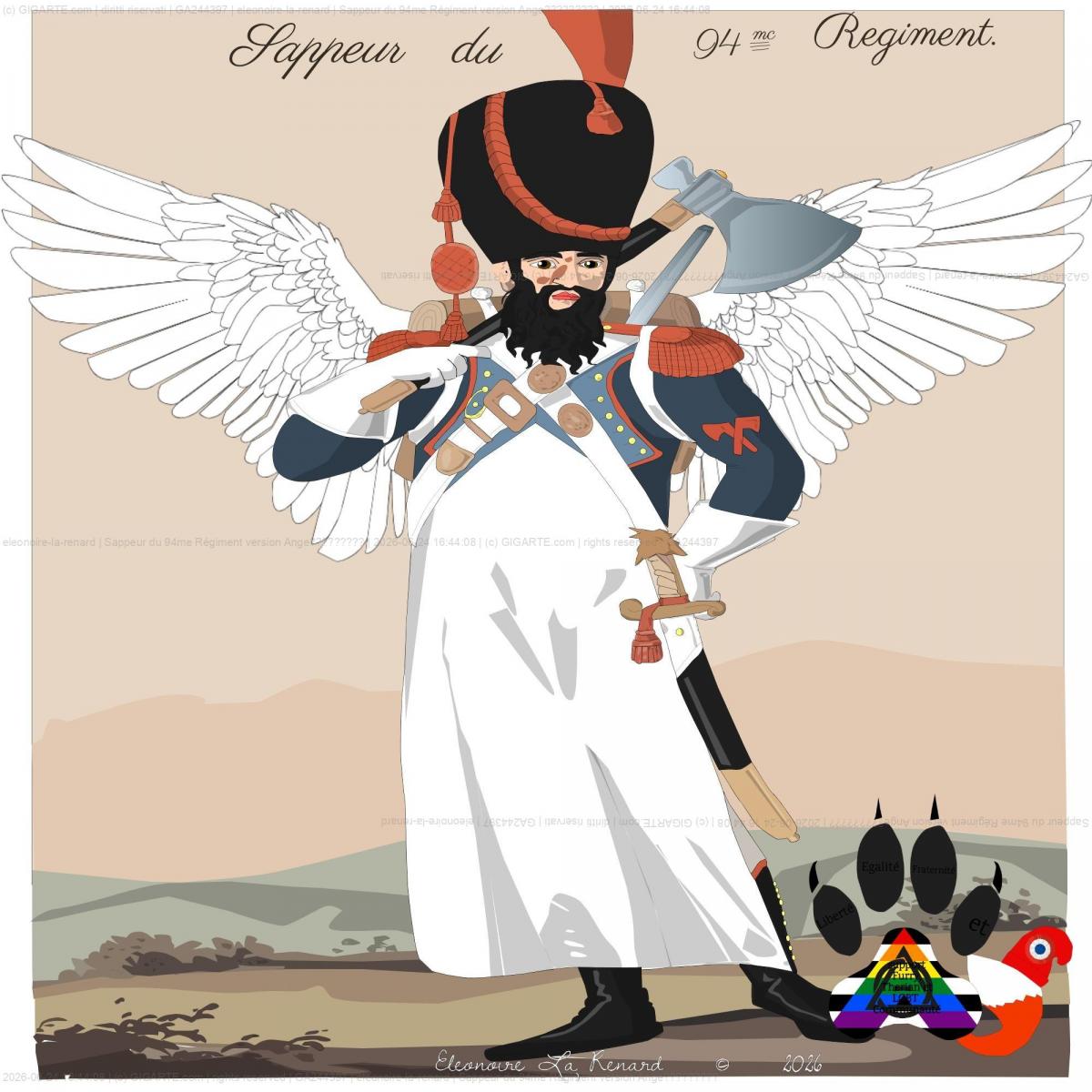
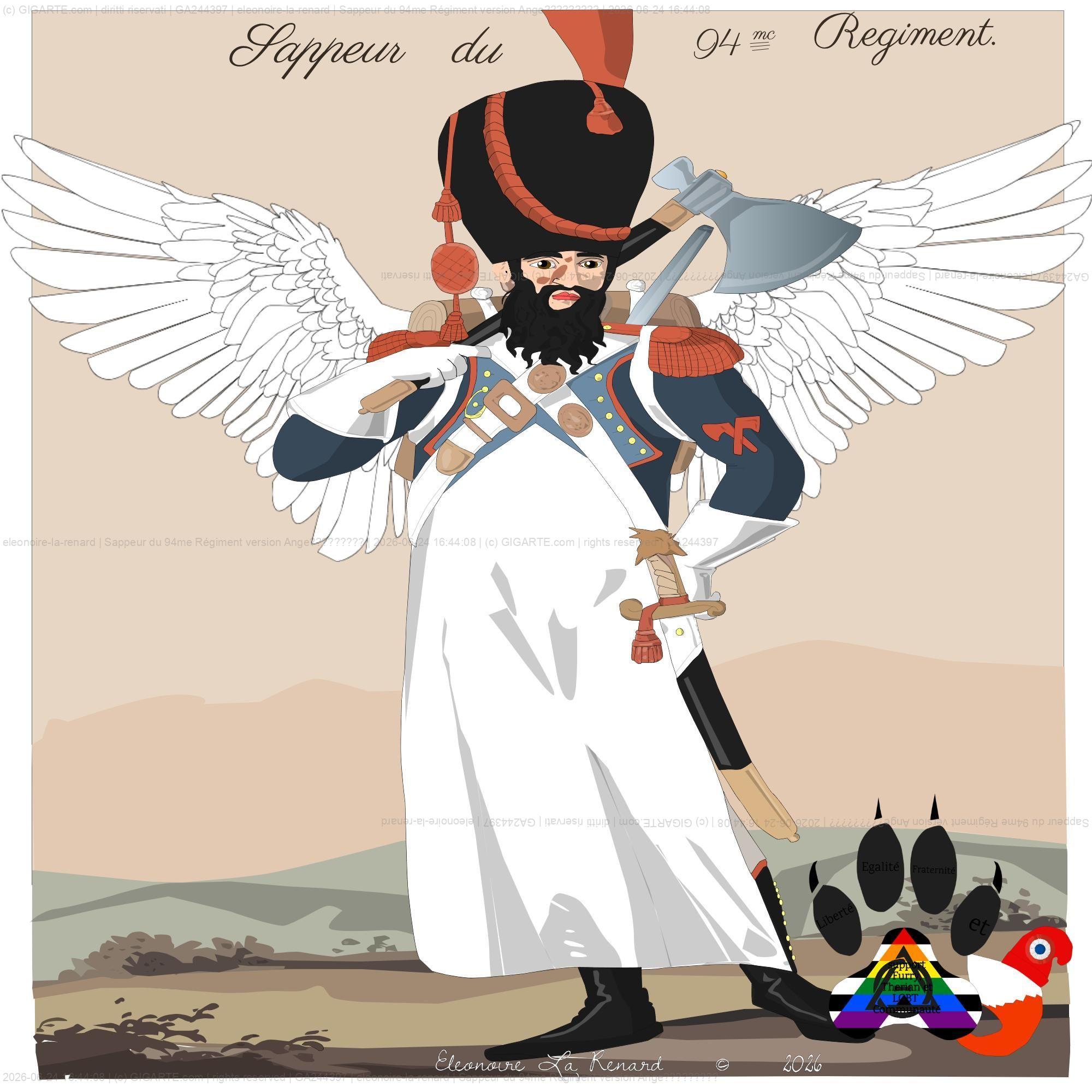
Sappeur du 94me Régiment version Ange?????????
art digital, 2026
What is a Sappeur (Sapper)?
In historical military terms—particularly within the French Army during the 18th and 19th centuries (including the Napoleonic Wars)—a *Sapeur* (Sapper) was a specialized combat engineer or pioneer.
The Role:Sappers were elite soldiers who marched at the very front of an infantry regiment. Their main duty was to clear the path for the advancing troops. They used heavy tools to break down enemy obstacles, chop through wooden barriers, clear foliage, and breach fortifications. Because they worked under direct enemy fire to clear the way, it was an incredibly dangerous and highly respected role.
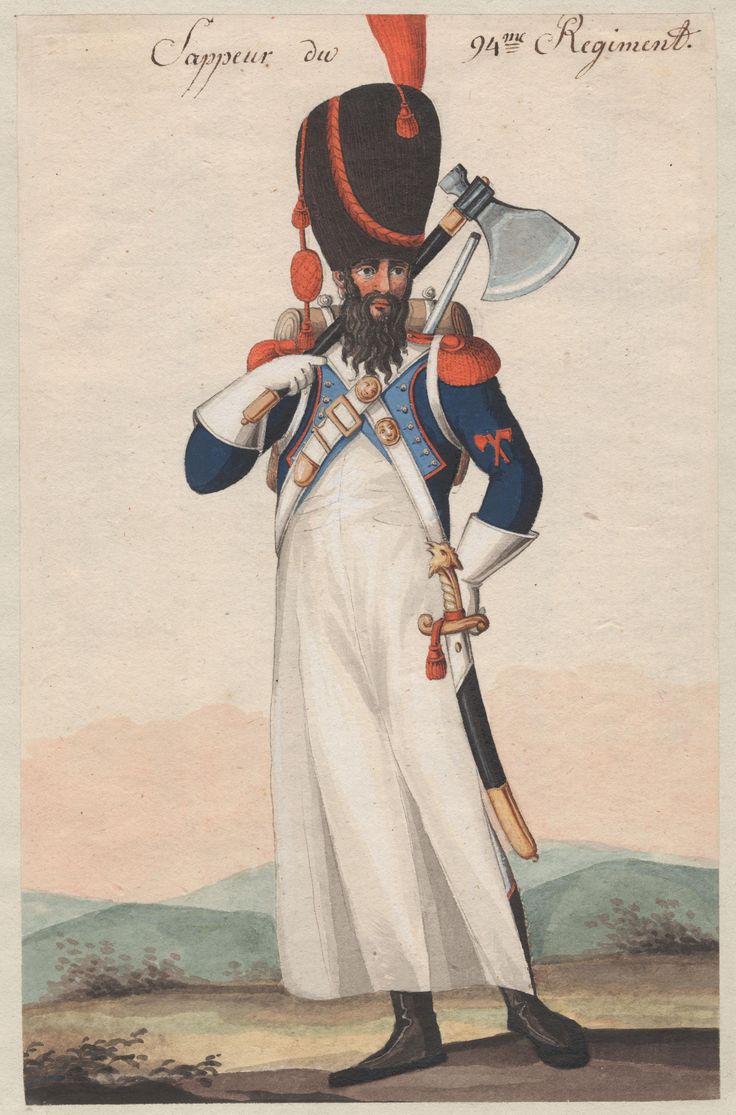
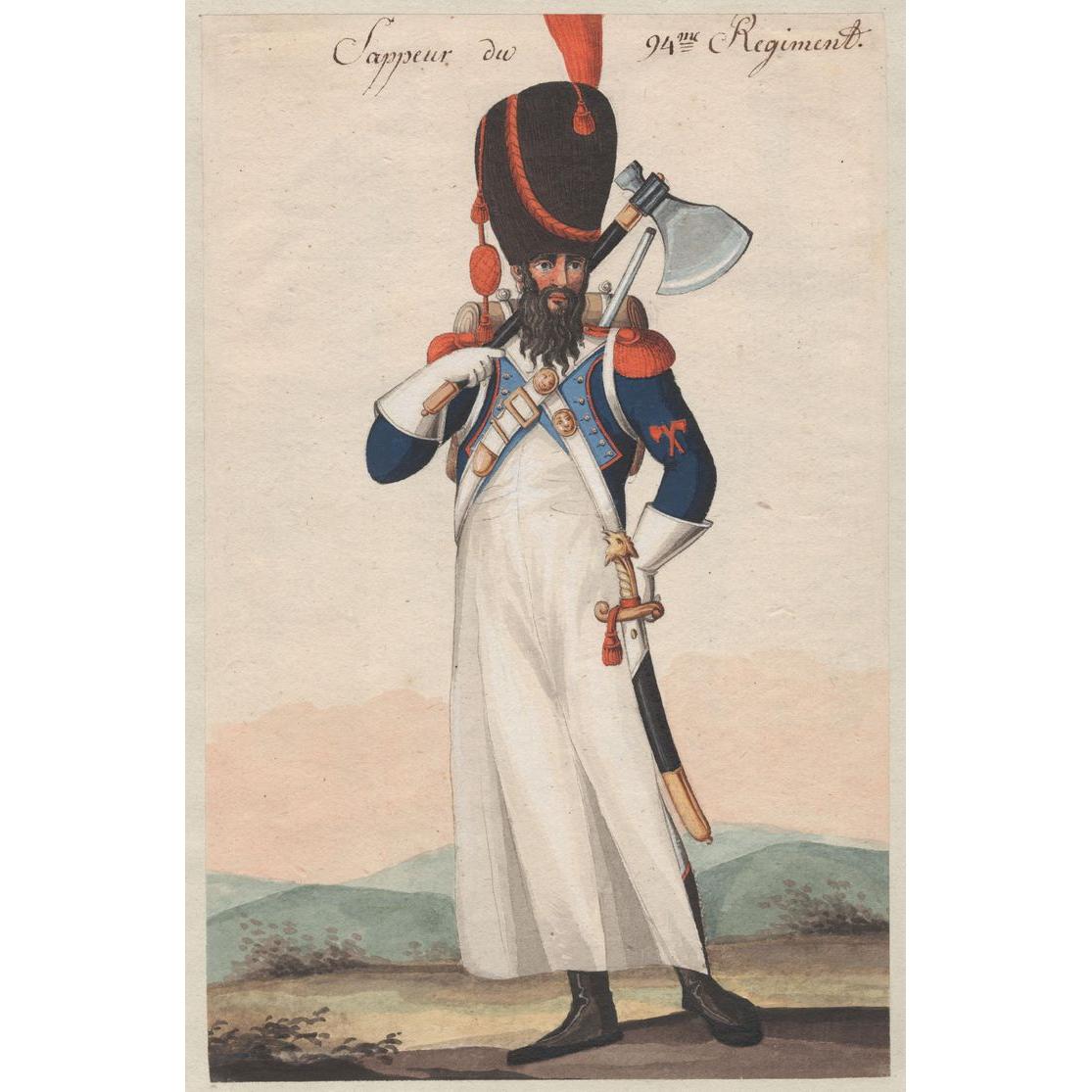
Distinctive Traditions: Due to the intense physical demands of the job, sappers were selected from the strongest, tallest, and most experienced veterans in the regiment. They were granted unique privileges and a legendary dress code, which is vividly illustrated in the artwork.
The Beard: Sappers were traditionally required to grow a full, long beard, which served as a symbol of their maturity, ruggedness, and veteran status.
The Axe:A large pioneer's axe was their primary tool, carried proudly over the shoulder during parades and marches.
The Apron:They wore a heavy, protective leather apron (usually white or tan) over their uniform to protect it from wood splinters, debris, and sparks while working.
Bearskin Cap:To make them look even more imposing at the head of the column, they wore tall bearskin caps (*bonnets à poil*), often adorned with red plumes and cords.
Context of the Work and the ArtistThe illustration is titled *"Sappeur du 94me Regiment"* (Sapper of the 94th Regiment), capturing a French pioneer in full ceremonial and field regalia. It highlights the classic blue uniform coat with red epaulets, the long white apron, protective white gauntlets, a short infantry saber (sabre-briquet), and his signature axe.Regarding the artist, due to tool restrictions preventing a live web-database look-up for this specific plate, the exact illustrator cannot be definitively named. However, plates of this precise style—characterized by delicate watercolors, fine ink outlines, and elegant French cursive labels at the top—were typical of the late 18th and 19th centuries. They were produced by renowned military illustrators (such as Nicolas-Toussaint Charlet, Carle Vernet, or the publisher Aaron Martinet) or hand-painted by contemporary military officers to document regiment uniforms. Today, rare historical prints and watercolors from this exact series are preserved in prestigious institutional archives, such as the Anne S.K. Brown Military Collection.
Informazioni generali
-
Categoria: Arte digitale
-
Eseguita il: 24 giugno 2026
Informazioni tecniche
- Tecnica: art digital
- Stile: History
Informazioni sulla vendita
- Disponibile: no
Informazioni Gigarte.com
- Codice GA: GA244397
- Archiviata il: 24/06/2026
Hai bisogno di informazioni?
Vuoi chiedere maggiori informazioni sull'opera? Vuoi conoscere il prezzo o fare una proposta di acquisto? Lasciami un messaggio, risponderò al più presto