The "Globist Chair" – An Aesthetic Manifesto
The "Globist Chair" – An Aesthetic Manifesto
Headline: Cultural Patchwork and Affective Design: The Chair as an Intimate Shell
This chair is not merely a piece of furniture; it is a heterogeneous composition that challenges the conventions of functionalist design. Created by Fanty Building (Enrico Thanhoffer Munico), it serves as a tangible expression of two core theories: Globism and the Mutanda Buildings.
1. Formal and Material AspectsThe chair is a calculated clash of craftsmanship and conceptual excess:
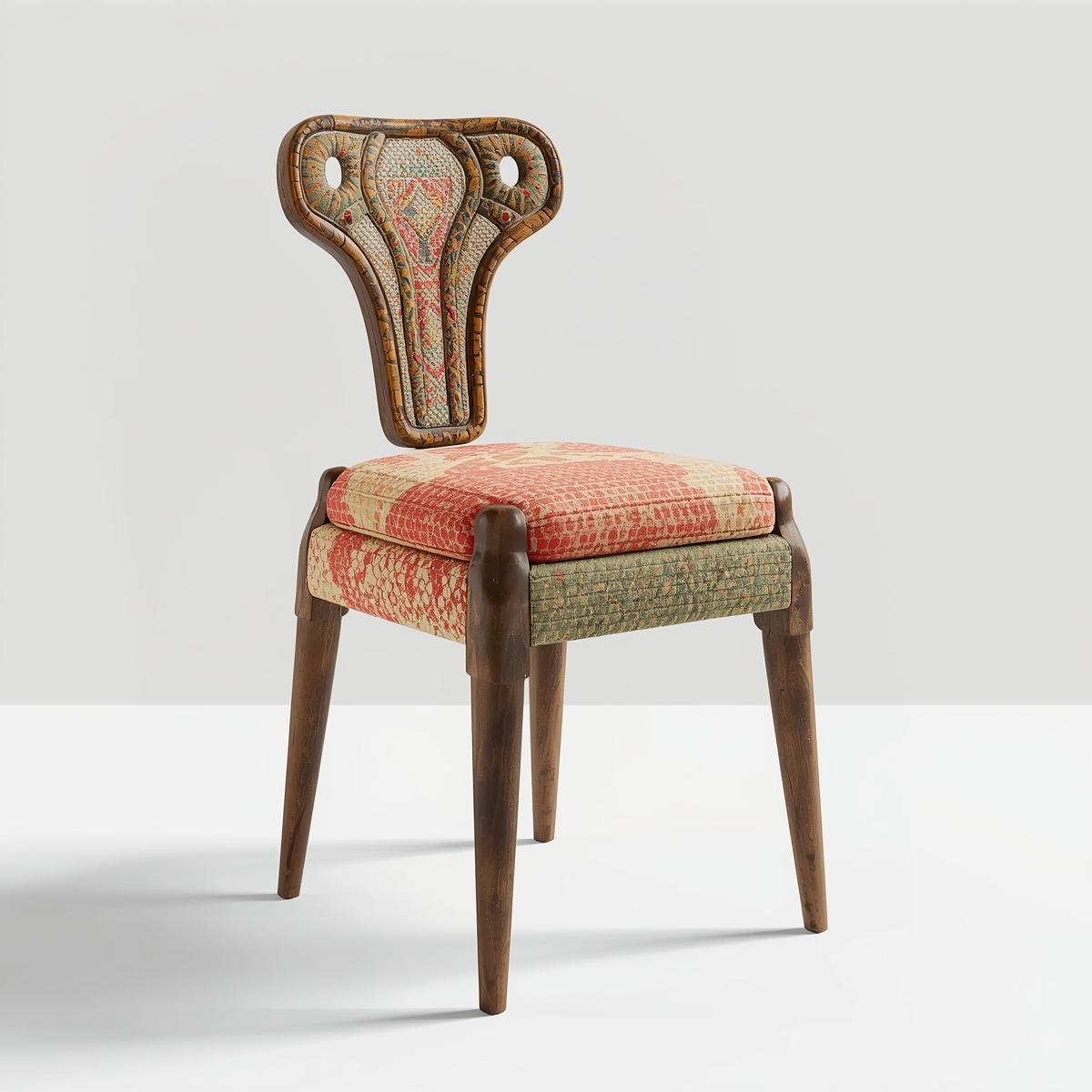
Traditional Structure: The legs and backrest frame are made of dark, polished wood. The classic, turned legs evoke traditional craftsmanship and solidity—a deliberate contrast to the rest of the piece.
Textile Stratification: The seat features layers of fabric. A dense green/beige weave wraps the structure like a band, while the upper cushion features an intricate red/cream pattern.
The "Iconic" Backrest: The elongated, shield-like backrest acts as a stylized centerpiece. Framed in wood, the central panel is covered in complex, oriental-style motifs enriched with relief stitching and beads, giving it a "sacred" or heirloom quality.
For Thanhoffer, Globism describes the aesthetic of visual globalization: the way different styles, materials, and cultures collide and fuse into an expressive "patchwork."
Cultural Patchwork: The chair blends traditional Western woodwork with non-Western or historical decorative fabrics. There is no minimalist harmony here; instead, there is a material and chromatic tension that reflects the visual saturation of our globalized world.
Historical Hybrid: By mixing a classical frame with post-modern upholstery, the piece absorbs and remixes different eras and geographies, rejecting formal purity.
The signature Mutanda Buildings philosophy applies the conceptual principles of the most intimate garment to the built environment.
Padded Aesthetics: The chair embodies the "briefs" through its thick, layered, and soft padding, evoking a sense of comfort and protection.
Conceptual Elasticity: The green/beige fabric band simulates the elastic waistband of underwear, "holding" the soft mass of the seat together.
Body-Centric Design: This is "Affective Design." The chair becomes an intimate extension of the body—an object that, like clothing, is in direct contact with the person, revealing their history beyond the public facade.
The Fanty Building chair rejects minimalist asceticism and cold functionality in favor of an aesthetic of excess and accumulation.
The Verdict: It is an aesthetic manifesto that illustrates Globism through its patchwork of styles and applies the Mutanda Building theory through its soft, enveloping, and body-referential form.
In a world of standardized boxes, this chair celebrates the chaotic, layered complexity of our global era.
Informazioni generali
-
Categoria: Architettura
Informazioni sulla vendita
- Disponibile: no
Informazioni Gigarte.com
- Codice GA: GA236043
- Archiviata il: 13/12/2025
Hai bisogno di informazioni?
Vuoi chiedere maggiori informazioni sull'opera? Vuoi conoscere il prezzo o fare una proposta di acquisto? Lasciami un messaggio, risponderò al più presto