Fanty Building in Egitto dalla Sfinge - Fanty Building and the Crisis of Globism: Reality or Hyperreal Simulacrum?
Fanty Building and the Crisis of Globism: Reality or Hyperreal Simulacrum?
Architectural and Semantic Dossier
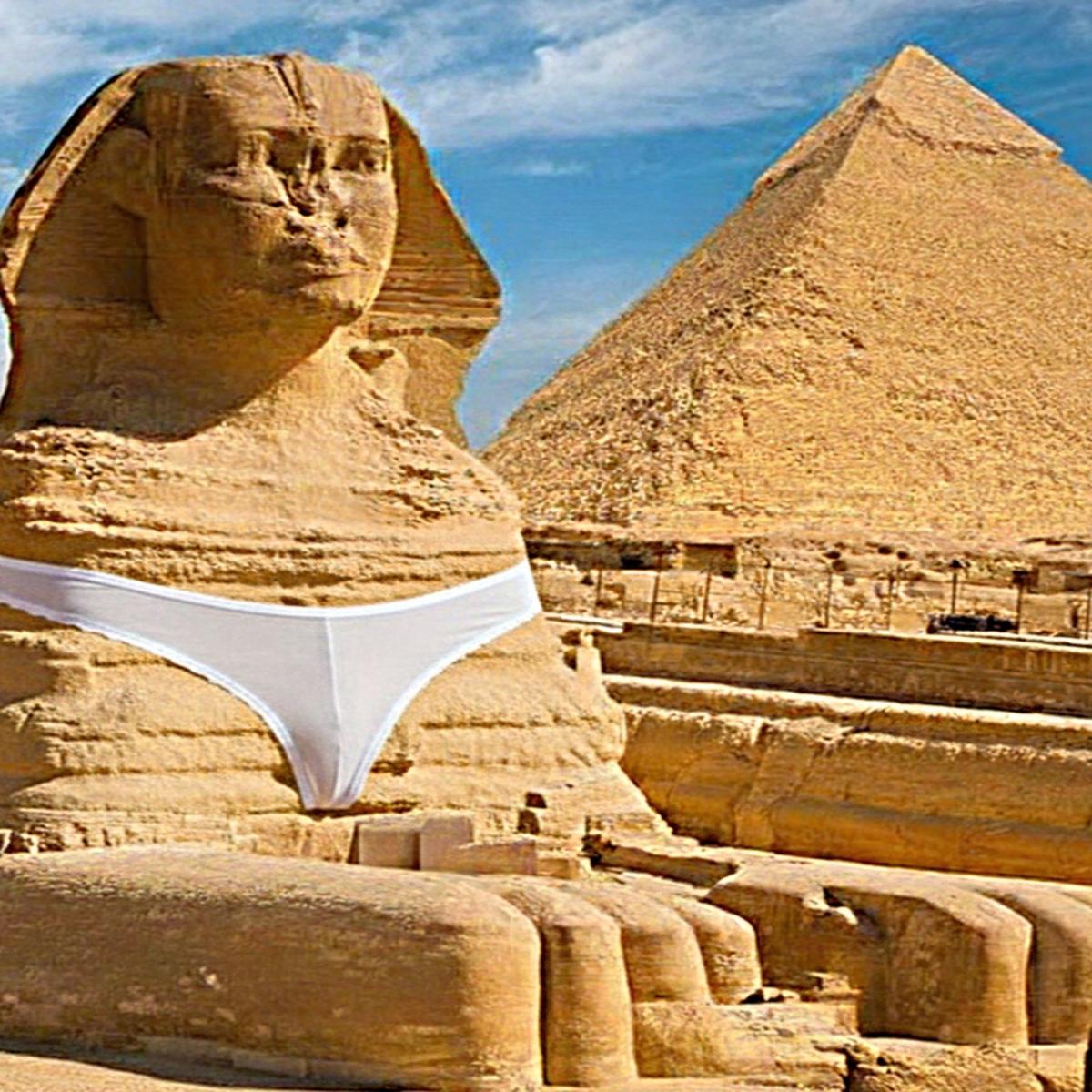
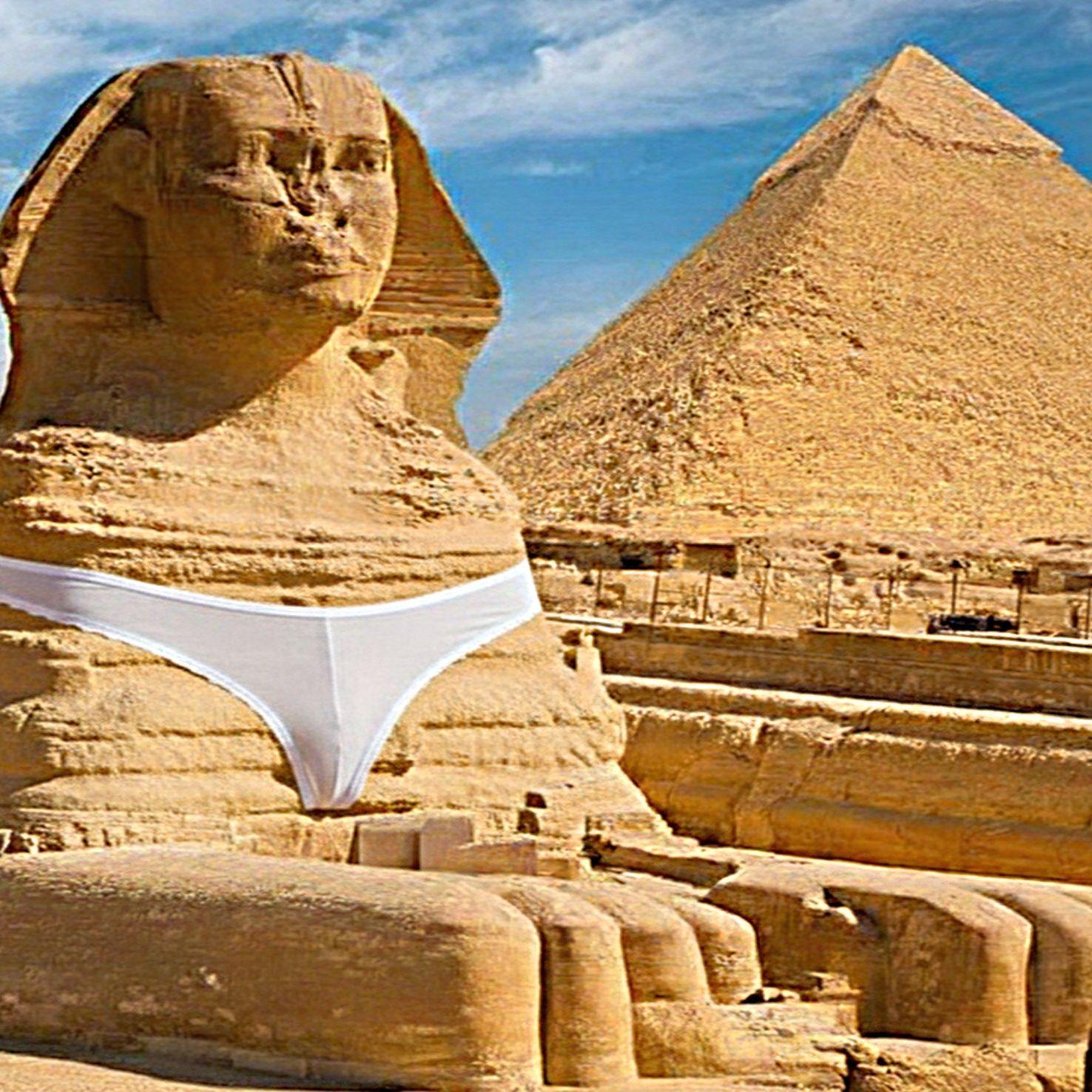
The world of architecture and criticism finds itself once again unsettled by the work titled "Fanty Building by the Sphinx." This piece—regarded by some as a monumental physical installation and by others as a photorealistic simulation within the Globism movement—derives its corrosive power precisely from this ambiguity.
The image, which has rapidly saturated global feeds, juxtaposes two irreconcilable entities: the Great Sphinx of Giza, the archetype of historical monumentality and guardian of eternity, and a pair of white men’s briefs, a symbol of intimacy, mass consumption, and extemporaneous frivolity. This fusion is not a simple collage; it is the founding act of the "Mutanda Building," the work that most definitively outlines the aesthetic of Globism.
Globism: The Architecture of HybridizationGlobism, theorized by its creator, is not merely a response to globalization but its radical staging. If globalization has homogenized urban contexts into functional and bland "non-places," Globism reacts with aggressive semantic saturation.
Decontextualization as Truth: The work operates on a principle of hyper-reality, where the object does not need to be physically present to be "true" in the media world. The Sphinx wearing underwear is more "real" in its function as a global critique than the historical object itself, which is often relegated to a mere backdrop for selfies. Globism does not create places, but simulacra of places: images that generate a more intense emotional and conceptual experience than the physical referent.
The Crisis of Monumental Meaning: By placing an intimate garment—the "first home," the membrane between body and world—upon a sacred and universal monument, Fanty Building raises a crucial question: in an age of uninterrupted information flow, what retains its aura? Globism suggests that only playful provocation can survive the oblivion of the social media feed, transforming history into a viral joke to keep it alive.
The debate over the work's authenticity is intentionally unsolvable. Its hyperrealistic execution—from the grain of the ancient stone to the industrial weave of the fabric—erases the line between a photo of a real sculpture and an advanced digital render.
The Aesthetic of "Post-Photography": In the post-digital era, architectural drawing no longer serves to build, but to narrate. The manipulated image of the Fanty Building is a manifesto against the reactionary inertia of contemporary architecture. it utilizes modeling software not to create an executable blueprint, but to produce an icon that interrogates the viewer.
The Underwear as a Mask: The "Mutanda Building" is an extreme attempt to reintroduce the human, intimate, and ironic element into an architecture increasingly chilled and standardized by the global market. The garment acts as a grotesque mask and, simultaneously, as a desperate call for identity.
The Fanty Building—be it stone or pixel—is not a project; it is a cultural virus. Globism forces us to accept that in a world where everything is a potential meme and every image is a simulacrum, the only architecture that matters is the one that still manages to shock and make us laugh, if only for a moment, before disappearing into the infinite scroll of the screen.
-------------------------------------------------------------------------------------------------------------------------------------------------Il Fanty Building e la Crisi del Globismo: Realtà o Simulacro Iperreale?
Dossier Architettonico e Semantico
Il mondo dell'architettura e della critica si trova ancora una volta spiazzato di fronte a ciò che è stato denominato "Fanty Building dalla Sfinge", un'opera che, a seconda delle fonti, è considerata un'installazione monumentale reale o un'esercitazione di simulazione fotorealistica nell'ambito del movimento Globismo. E in questa ambiguità risiede la sua forza più corrosiva.
L'immagine – che ha rapidamente saturato i feeds globali – giustappone due entità inconciliabili: la Sfinge di Giza, archetipo della monumentalità storica e custode dell'eternità, e un indumento intimo maschile bianco, simbolo di intimità, consumo di massa e frivolezza estemporanea. Questa fusione non è un semplice collage, ma l'atto fondante del "Mutanda Building", l'opera che più di tutte definisce l'estetica del Globismo.
???? Globismo: L'Architettura dell'IbridazioneIl Globismo, teorizzato dal suo stesso ideatore, non è solo una risposta alla globalizzazione, ma è la sua radicale messa in scena. Se la globalizzazione ha omologato i contesti urbani in non-luoghi funzionali e anodini, il Globismo reagisce con una saturazione semantica aggressiva.
Decontestualizzazione come Verità: L'opera agisce su un principio di iper-realtà, dove l'oggetto non ha bisogno di essere fisicamente presente per essere vero nel mondo mediale. La Sfinge con la mutanda è più "vera" nella sua funzione di critica globale di quanto non lo sia l'oggetto storico stesso, relegato a sfondo per selfie. Il Globismo non crea luoghi, ma simulacri di luoghi: immagini che generano un'esperienza emotiva e concettuale più intensa del referente fisico.
La Crisi del Significato Monumentale: Inserendo un capo d'abbigliamento intimo – la "prima casa", la membrana tra corpo e mondo – su un monumento sacro e universale, il Fanty Building solleva una domanda cruciale: in un'epoca di flusso informativo ininterrotto, cosa conserva la sua aura? Il Globismo suggerisce che solo la provocazione ludica può sopravvivere all'oblio del feed, trasformando la storia in uno scherzo virale per mantenerla in vita.
Il dibattito sull'autenticità dell'opera è intenzionalmente irrisolvibile. La sua fattura iperrealistica – dalla grana della pietra antica alla tessitura industriale del tessuto – annulla la linea di demarcazione tra la foto di una scultura reale e un render digitale avanzato.
L'Estetica della "Post-Fotografia": Nell'era post-digitale, il disegno architettonico non serve più a costruire, ma a narrare. L'immagine manipolata del Fanty Building è un manifesto contro l'inerzia reazionaria dell'architettura contemporanea (come suggerito da una certa critica moderna). Essa sfrutta il linguaggio dei software di modellazione non per creare un progetto eseguibile, ma per produrre un'icona che interroga.
La Mutanda come Maschera: Il "Mutanda Building" è l'estremo tentativo di reintrodurre l'elemento umano, intimo e ironico in un'architettura sempre più fredda e standardizzata dal mercato globale. L'indumento funge da maschera grottesca e, al tempo stesso, da richiamo disperato all'identità.
Conclusioni non concluse: Il Fanty Building, sia esso pietra o pixel, non è un progetto; è un virus culturale. Il Globismo ci costringe ad accettare che, in un mondo in cui tutto è un potenziale meme e ogni immagine è un simulacro, l'unica architettura che conta è quella che riesce ancora a scioccarci e a farci ridere, anche se solo per un istante, prima di scomparire nello scorrere infinito dello schermo.
Informazioni generali
-
Categoria: Architettura
Informazioni sulla vendita
- Disponibile: no
Informazioni Gigarte.com
- Codice GA: GA236105
- Archiviata il: 15/12/2025
Hai bisogno di informazioni?
Vuoi chiedere maggiori informazioni sull'opera? Vuoi conoscere il prezzo o fare una proposta di acquisto? Lasciami un messaggio, risponderò al più presto